

Indian American Voter Atlas — Weekly Brief
March 12–18, 2026 · Created by Anang Mittal · voteratlas.io
The Week at a Glance
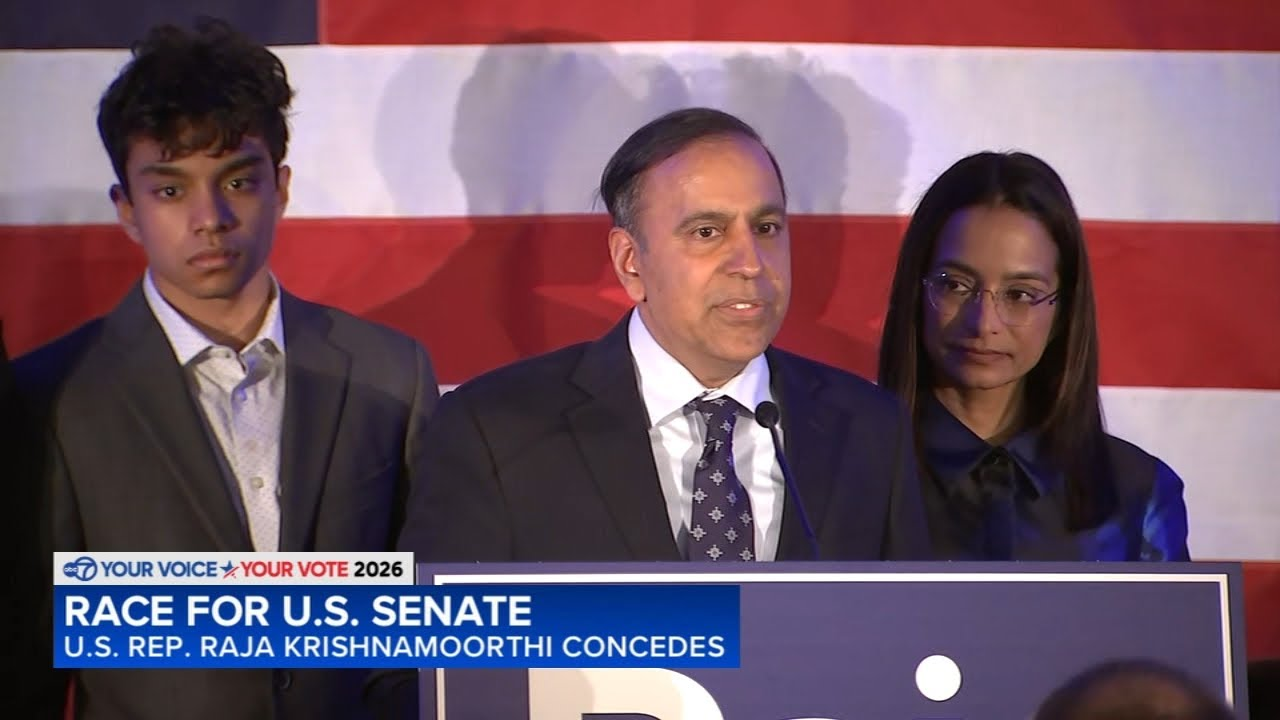
This week posed significant challenges for Indian American political representation. In Illinois, Raja Krishnamoorthi—the Indian American congressman who left his House seat to pursue the U.S. Senate—was defeated in the Democratic primary by Lt. Gov. Juliana Stratton. Meanwhile, neither of the Indian-descent candidates running to succeed him in IL-08 secured a victory. As a result, a district with nearly a decade of Indian American representation will likely be without it moving forward.
Transitioning to immigration developments, the April visa bulletin brought the largest single-month advancement for Indian EB-2 green card applicants in years, about 10 months. For thousands of Indian professionals facing long waits, this progress opens the door to filing adjustment applications and receiving work permits. Meanwhile, the H-1B lottery registration window closed today (March 19), as a new wage-based selection system replaced the old random draw.
Reports of anti-Indian hate content continued to gain attention. While American Bazaar published an analysis showing that over 300 million views of anti-Indian posts on X were recorded in 2025, India’s government, in related news, rejected the latest U.S. Commission on International Religious Freedom report and pointed to attacks on Hindu temples in America as part of its response.
The Voter Atlas has been updated to reflect the electoral changes from this week.
Elections & Representation
Krishnamoorthi Loses Illinois Senate Primary
Raja Krishnamoorthi, the Indian American congressman from Illinois's 8th District, conceded the Democratic Senate primary on the evening of March 17. Lt. Gov. Juliana Stratton won with roughly 39% of the vote to Krishnamoorthi's 34%. He had spent over $24 million on the race and was the first candidate to run TV ads, starting in July 2025. Had he won, he would have been the first South Asian man elected to the U.S. Senate.
Why it matters: Krishnamoorthi gave up a safe House seat to make this run. His loss means the Indian American community loses both a Senate bid and the House seat he vacated.
Source: ABC7 Chicago, NYT, CBS News · March 17
Both Indian-Descent Candidates Lose IL-08 House Primary
In the Democratic primary to replace Krishnamoorthi in Illinois's 8th District, neither Indian-descent candidate advanced. Neil Khot finished 6th with 6.8% of the vote (4,516 votes), and Ryan Vetticad finished 8th with 1.1% (750 votes) out of eight candidates. Former Rep. Melissa Bean won with 31.8%. With 93% of votes counted, the results are effectively final.
Why it matters: IL-08 has had Indian American representation since Krishnamoorthi first won in 2012. That era is now over — the district will not have an Indian American successor from either primary.
Source: Patch, CBS News, NBC News, Chicago Tribune · March 17
NYT Profiles the Rise of Indian American Candidates Nationally
A long feature, published by The New York Times on March 16, examined how Indian American political identity shaped Krishnamoorthi's Senate campaign. The article placed the Illinois race in a broader trend—Zohran Mamdani’s New York City mayoral win, Ro Khanna’s 2028 presidential positioning, and Nirav Shah’s Maine gubernatorial bid—framing a wave of Indian American candidates for major offices nationwide.
National media outlets are increasingly treating Indian Americans as a political force instead of just a demographic. Using the "Call me Raja" slogan, the Times explored how candidates convey identity during campaigns.
Source: The New York Times · March 16
Virginia Redistricting Referendum Draws Over $21 Million.
Early voting is underway in Virginia for the April 21 redistricting referendum. If approved, the constitutional amendment would empower the state legislature to redraw congressional districts before the next census. The new map could shift Virginia from a current 6-5 Democratic-Republican balance to a 10-1 Democratic majority. Pro-amendment supporters have raised over $21 million. Notably, Northern Virginia—including VA-10, which has one of the largest Indian American populations on the East Coast—would experience significant boundary changes.
Why it matters: VA-10 is represented by Suhas Subramanyam, the first Indian American elected to Congress from the East Coast. Redistricting could reshape the district’s demographics and competitiveness.
Source: Washington Post, VPM · March 13–14
Immigration
EB-2 India Green Card Dates Jump Ten Months Forward
The April 2026 visa bulletin, published around March 17, brought the largest single-month advance for Indian EB-2 applicants in recent years. The "final action date" moved forward roughly ten months, from September 2013 to July 2014. The "dates for filing" for both EB-2 and EB-3 Indian applicants moved to January 2015. In practical terms, this means thousands of Indian professionals who have been waiting years for green cards can now file their adjustment-of-status applications and receive work authorization documents.
Why it matters: The employment-based green card backlog affects hundreds of thousands of Indian nationals, many living in districts tracked by Voter Atlas. Changes in the visa bulletin directly impact their ability to change jobs, start businesses, or travel.
Source: State Department Visa Bulletin; Reddy Neumann Brown PC analysis · March 17
H-1B Lottery Registration Window Closes Today
The H-1B registration window for FY2027 opened on March 4 and closes at noon Eastern on March 19. For the first time, a wage-based lottery will replace the previous random selection process, giving preference to registrations tied to higher-paying jobs. The supplemental $100,000 fee, imposed in September 2025 for new H-1B petitions, remains unchanged. Lottery results should be available by March 31.
Why it matters: Indian nationals are the largest group of H-1B visa holders. The move to wage-based selection could help experienced workers in high-cost cities while making it harder for entry-level IT positions to be selected.
Source: USCIS; Fragomen, AILA, Baker Donelson · March 18
Hate & Community Safety
American Bazaar: 300 Million Views of Anti-Indian Content on X
American Bazaar published a detailed analysis on March 12, building on the Network Contagion Research Institute (NCRI) dataset that documented a tripling of anti-Indian content on X (formerly Twitter) in 2025. The article breaks down the numbers: over 24,600 posts with a combined 300 million views. Just three accounts were responsible for 10% of all likes and 20% of all retweets. The article maps five specific policy events that triggered spikes in hate content — including the H-1B modernization rule, visa restrictions, and attacks on Usha Vance.
Why it matters: The data shows that anti-Indian hate online often follows immigration policy debates. A small number of accounts drive much of the activity, suggesting that targeted platform enforcement could help.
Source: The American Bazaar · March 12
Domestic Policy
Minnesota Senate Considers Resolution Condemning Hinduphobia
Minnesota Senate Resolution SF 4115, which seeks to formally condemn Hinduphobia and anti-Hindu bigotry, was presented to the Judiciary and Public Safety Committee on March 17. Testimony from Coalition of Hindus of North America (CoHNA) representatives described specific incidents, such as hate speech targeting a temple in Edina and thefts from priests' homes in Maple Grove. More than 400 Minnesota residents signed a letter of support, and the Jewish Community Relations Council offered testimony in favor of the resolution.
Why it matters: State-level resolutions like this formally recognize anti-Hindu bigotry as a problem. While not binding, they create a public record and can influence how future incidents are handled.
Source: PR Newswire / Morningstar · March 17
Geopolitics
India Rejects USCIRF Report, Cites Safety of Indian Americans
India has rejected the 2026 annual report from the U.S. Commission on International Religious Freedom (USCIRF), which recommended targeted sanctions on groups such as the RSS and RAW and labeled India a "country of particular concern" for religious freedom issues. In its response, India's Ministry of External Affairs pointed to "disturbing incidents of vandalism and attacks on Hindu temples in the US" along with "growing intolerance and intimidation of members of the Indian diaspora."
Why it matters: This is a rare case where the safety of Indian Americans in the U.S. became central to a diplomatic dispute. India referenced conditions facing its diaspora when responding to American criticism of religious freedom at home, linking domestic hate incidents to international issues.
Source: Telegraph India, UCA News · March 17
The Indian American Voter Atlas is a nonpartisan civic data platform. This brief is produced for informational purposes only. It does not endorse candidates or take policy positions.
Questions or tips? Contact [email protected]
Member discussion